

What are the advantages of using TA1 Titanium?
Oct 27, 2025
Titanium is a remarkable metal known for its outstanding properties, and among its various grades, TA1 Titanium stands out as a highly versatile and valuable material. As a TA1 Titanium supplier, I am excited to share with you the numerous advantages of using TA1 Titanium in a wide range of applications.
Exceptional Corrosion Resistance
One of the most significant advantages of TA1 Titanium is its exceptional corrosion resistance. This metal forms a thin, protective oxide layer on its surface when exposed to oxygen, which acts as a barrier against further corrosion. This oxide layer is self - healing, meaning that if it is damaged, it will reform quickly in the presence of oxygen. As a result, TA1 Titanium can withstand harsh environments, including exposure to seawater, acids, and alkalis.
In marine applications, for example, TA1 Titanium is an ideal choice for components such as propellers, hulls, and underwater pipelines. The high salt content in seawater can cause severe corrosion to many metals, but TA1 Titanium remains highly resistant, ensuring long - term durability and reliability. In the chemical industry, where equipment is often exposed to corrosive chemicals, TA1 Titanium can be used to manufacture reaction vessels, storage tanks, and piping systems, reducing the need for frequent replacements and maintenance.
High Strength - to - Weight Ratio
Another key advantage of TA1 Titanium is its excellent strength - to - weight ratio. Despite being relatively lightweight, TA1 Titanium has high tensile strength. This property makes it an attractive option for applications where weight reduction is crucial without sacrificing strength.
In the aerospace industry, weight is a critical factor as it directly affects fuel efficiency and payload capacity. TA1 Titanium is used in the manufacturing of aircraft components such as airframes, engine parts, and landing gear. By using TA1 Titanium instead of heavier metals like steel, aircraft manufacturers can significantly reduce the overall weight of the aircraft, leading to lower fuel consumption and increased performance.
In the automotive industry, TA1 Titanium can be used in the production of engine valves, connecting rods, and suspension components. The reduced weight of these components can improve the vehicle's acceleration, handling, and fuel economy.
Biocompatibility
TA1 Titanium is highly biocompatible, which means it is well - tolerated by the human body. This property makes it an ideal material for medical applications. When implanted in the body, TA1 Titanium does not cause adverse reactions such as inflammation or rejection.
In orthopedic surgery, TA1 Titanium is used to manufacture implants such as hip and knee replacements, bone plates, and screws. These implants can integrate well with the surrounding bone tissue, providing long - term stability and support. In dental applications, TA1 Titanium is used for dental implants, crowns, and bridges. Its biocompatibility ensures that the dental implants can function effectively in the oral cavity without causing any discomfort or health issues to the patient.
Good Thermal Conductivity
TA1 Titanium has good thermal conductivity, which allows it to transfer heat efficiently. This property is beneficial in applications where heat dissipation is important.
In the electronics industry, TA1 Titanium can be used in heat sinks and electronic enclosures. Heat sinks made of TA1 Titanium can effectively absorb and dissipate heat generated by electronic components such as microprocessors and power transistors, preventing overheating and ensuring the reliable operation of the electronics. In the energy sector, TA1 Titanium can be used in heat exchangers, where it can transfer heat between different fluids efficiently, improving the overall energy efficiency of the system.
Weldability and Formability
TA1 Titanium is relatively easy to weld and form, which gives manufacturers greater flexibility in the design and production of components. It can be welded using various welding techniques, such as tungsten inert gas (TIG) welding and electron beam welding. The welded joints of TA1 Titanium have high strength and good corrosion resistance, similar to the base metal.
In terms of formability, TA1 Titanium can be easily shaped into different forms, including sheets, bars, tubes, and wires. This allows manufacturers to create complex - shaped components according to specific design requirements. For example, in the construction industry, TA1 Titanium sheets can be formed into roofing materials, facades, and structural elements, adding a modern and durable touch to buildings.

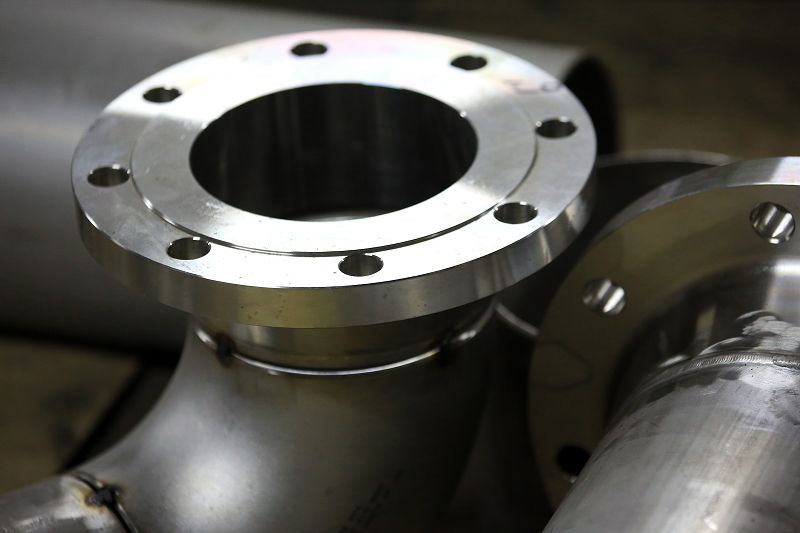
Comparison with Other Titanium Grades
While TA1 Titanium has many advantages, it is also useful to compare it with other titanium grades such as TC 4 Titanium, TA9 Titanium, and TA15 Titanium.
TC 4 Titanium, also known as Ti - 6Al - 4V, is a widely used titanium alloy. It has higher strength than TA1 Titanium but is also more expensive. TC 4 Titanium is often used in applications where high strength is required, such as aerospace and military applications.
TA9 Titanium is a titanium - palladium alloy. It has better corrosion resistance than TA1 Titanium in some aggressive environments, especially in reducing acids. TA9 Titanium is commonly used in chemical processing and marine applications where enhanced corrosion protection is needed.
TA15 Titanium is a near - alpha titanium alloy with high strength and good weldability. It is mainly used in aerospace applications where high - strength components are required.
Compared with these grades, TA1 Titanium offers a good balance of properties at a relatively lower cost. It is suitable for a wide range of applications where the above - mentioned advantages such as corrosion resistance, strength - to - weight ratio, and biocompatibility are needed without the need for extremely high - end properties.
Conclusion
In conclusion, TA1 Titanium offers a multitude of advantages, including exceptional corrosion resistance, high strength - to - weight ratio, biocompatibility, good thermal conductivity, and excellent weldability and formability. These properties make it a versatile material suitable for a wide range of industries, from aerospace and automotive to medical and chemical.
If you are in need of high - quality TA1 Titanium for your projects, I invite you to contact us for procurement and further discussion. Our team of experts is ready to assist you in selecting the right TA1 Titanium products and providing you with the best solutions.
References
-ASM Handbook Volume 2: Properties and Selection: Nonferrous Alloys and Special - Purpose Materials. ASM International.
-Lütjering, G., & Williams, J. C. (2007). Titanium. Springer Science & Business Media.
-Schwartz, M. M. (2000). Titanium Alloys: Properties, Processing, and Applications. ASM International.