

What is the ductility of TA10 Titanium?
Dec 30, 2025
Hey there! As a supplier of TA10 Titanium, I often get asked about the ductility of this amazing material. So, let's dive right in and explore what ductility means for TA10 Titanium.
First off, what's ductility? In simple terms, ductility is the ability of a material to be stretched or drawn into a wire without breaking. It's a crucial property, especially in industries where shaping and forming materials are key. For TA10 Titanium, its ductility plays a huge role in its wide - spread applications.
TA10 Titanium is a titanium - palladium alloy. The addition of palladium gives it enhanced corrosion resistance, but it also has an impact on its mechanical properties, including ductility. This alloy is known for its good combination of strength and ductility, which makes it a top choice in many sectors.
One of the great things about TA10 Titanium is that it can withstand significant deformation before failure. This is because of its unique crystal structure. Titanium has a hexagonal close - packed (HCP) crystal structure at room temperature. When it comes to deformation, the HCP structure allows for certain slip systems to operate. Slip is basically the movement of dislocations within the crystal lattice, and it's what enables the material to change shape.
In the case of TA10 Titanium, the presence of palladium can influence these slip systems. Palladium atoms can interact with the titanium lattice, either by solid - solution strengthening or by affecting the mobility of dislocations. This interaction can actually improve the ductility of the alloy in some cases.
Let's talk about how we measure the ductility of TA10 Titanium. The most common way is through a tensile test. In a tensile test, a sample of TA10 Titanium is clamped at both ends and slowly pulled until it breaks. During this process, we measure the amount of elongation and reduction in cross - sectional area. The elongation at break is a key indicator of ductility. A higher elongation at break means the material can stretch more before it fails, which is a sign of good ductility.
Typically, TA10 Titanium shows a decent elongation at break. In industrial standards, the elongation of TA10 Titanium can range from around 18% to 25% depending on factors like the heat treatment it has undergone and the specific manufacturing process. Heat treatment can have a big impact on the ductility. For example, annealing can relieve internal stresses in the material and promote the growth of larger grains. Larger grains generally have fewer grain boundaries, and since grain boundaries can impede the movement of dislocations, larger grains can sometimes lead to better ductility.
Now, let's compare TA10 Titanium with some other titanium alloys. There's TC2 Titanium, which is a different type of titanium alloy. TC2 Titanium has its own set of properties. It's often used in aerospace applications due to its high strength - to - weight ratio. However, when it comes to ductility, TA10 Titanium may have an edge in some cases. TC2 Titanium might be stronger in terms of ultimate tensile strength, but TA10 Titanium can often be more easily formed into complex shapes because of its better ductility.
Another alloy is TA3 Titanium. TA3 Titanium is a commercially pure titanium alloy. It has good corrosion resistance and is relatively easy to work with. But compared to TA10 Titanium, the addition of palladium in TA10 gives it some unique properties. TA10 can have better corrosion resistance in certain environments, and its ductility can also be tailored to specific applications more effectively through alloying and heat treatment.
Then there's TB5 Titanium. TB5 Titanium is a high - strength titanium alloy. It's often used in applications where high strength is the top priority, like in some high - performance aerospace components. However, its high strength comes at the cost of some ductility. TA10 Titanium, on the other hand, offers a more balanced combination of strength and ductility, making it suitable for a wider range of applications.
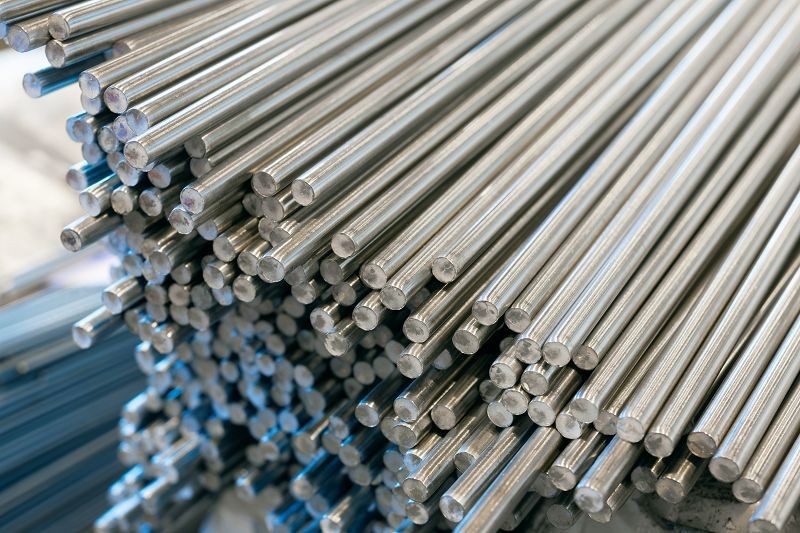

The ductility of TA10 Titanium makes it ideal for many industries. In the chemical processing industry, its corrosion resistance and ductility are a winning combination. It can be formed into pipes, tanks, and other equipment that need to withstand harsh chemical environments. In the marine industry, TA10 Titanium can be used for shipbuilding components. Its ability to be shaped into different forms and its resistance to seawater corrosion make it a great choice.
In the medical field, TA10 Titanium's biocompatibility along with its ductility is very important. It can be used to make surgical implants. The ductility allows the implants to be shaped to fit the specific needs of the patient, and its corrosion resistance ensures that it won't react with the body's fluids over time.
As a supplier of TA10 Titanium, I understand the importance of providing high - quality material with consistent ductility. We use advanced manufacturing processes to ensure that our TA10 Titanium meets the required standards. Our quality control team conducts regular tests to check the mechanical properties, including ductility, of every batch of material we produce.
If you're in the market for TA10 Titanium, whether it's for a small - scale project or a large - scale industrial application, we can offer you the best product. Our TA10 Titanium is available in various forms such as sheets, bars, and tubes. We can also provide custom - made products according to your specific requirements.
If you have any questions about the ductility of TA10 Titanium or want to discuss a potential purchase, don't hesitate to reach out. We're here to help you make the right choice for your project.
References
- "Titanium and Titanium Alloys: Fundamentals and Applications"
- "Mechanical Behavior of Materials" textbooks for general material science concepts related to ductility and titanium alloys.