

What is the heat resistance of TA10 Titanium?
Dec 24, 2025
Hey there! As a supplier of TA10 Titanium, I often get asked about its heat resistance. So, I thought I'd write this blog to share some insights on this topic.
First off, let's understand what TA10 Titanium is. TA10 Titanium is a titanium alloy that's widely used in various industries due to its excellent combination of properties. It's a near - alpha titanium alloy, which means it has a microstructure that gives it good strength, corrosion resistance, and of course, heat resistance.
Heat Resistance Basics
Heat resistance is all about how well a material can maintain its properties when exposed to high temperatures. For TA10 Titanium, it can withstand relatively high temperatures without significant loss of its mechanical properties.
One of the key factors that contribute to TA10 Titanium's heat resistance is its chemical composition. It contains a small amount of palladium (Pd), which enhances its corrosion resistance, especially in reducing acid environments. But it also plays a role in improving the alloy's performance at elevated temperatures.
At normal operating temperatures, TA10 Titanium has a yield strength of around 345 - 485 MPa and an ultimate tensile strength of 485 - 620 MPa. These values are quite impressive, but what happens when we crank up the heat?
Performance at Elevated Temperatures
When TA10 Titanium is exposed to temperatures up to about 350 - 400°C, it retains a significant portion of its room - temperature strength. This makes it suitable for applications where it might be exposed to moderate heat, such as in some chemical processing equipment, heat exchangers, and marine applications.

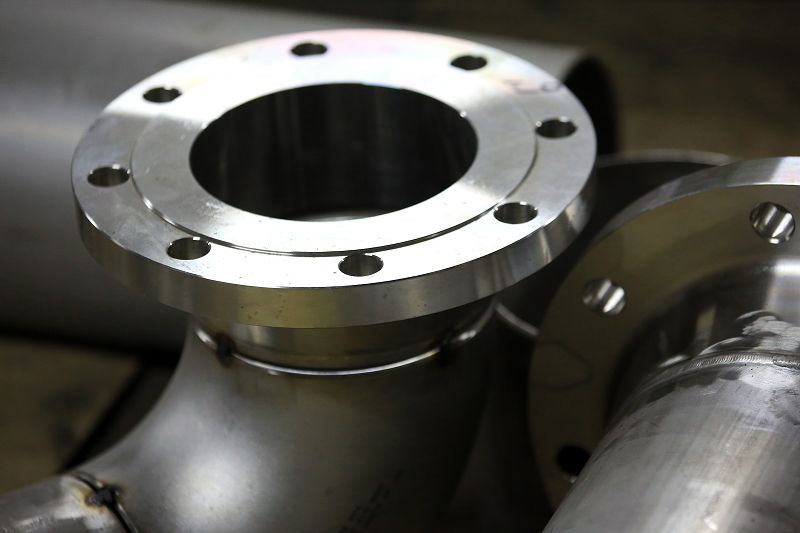
As the temperature rises above 400°C, the strength of TA10 Titanium starts to gradually decrease. However, compared to some other materials, it still maintains its integrity better. For example, at 500°C, while the strength is lower than at room temperature, it can still handle a reasonable amount of stress.
The heat resistance of TA10 Titanium also depends on the duration of exposure. Short - term exposure to high temperatures might not cause as much damage as long - term exposure. If the alloy is exposed to high temperatures for an extended period, there could be some microstructural changes, such as grain growth, which can affect its mechanical properties.
Comparison with Other Titanium Alloys
It's always interesting to see how TA10 Titanium stacks up against other titanium alloys in terms of heat resistance. Let's take a look at some popular titanium alloys like TA15 Titanium, TA9 Titanium, and TC3 Titanium.
TA15 Titanium is a high - strength titanium alloy. It has better high - temperature strength compared to TA10 Titanium. TA15 can be used at temperatures up to around 500 - 600°C for certain applications. This is because it has a different alloying system that gives it enhanced high - temperature performance.
TA9 Titanium, on the other hand, is similar to TA10 in some ways as it also contains palladium for improved corrosion resistance. However, its heat resistance is also in the same ballpark as TA10 Titanium, with good performance up to around 350 - 400°C.
TC3 Titanium is a two - phase (alpha + beta) titanium alloy. It has a different microstructure and alloying elements compared to TA10. TC3 has relatively good heat resistance, but its performance at high temperatures is also influenced by factors like heat treatment. In general, it can handle higher temperatures than TA10 in some cases, especially if it's properly heat - treated.
Applications Benefiting from Heat Resistance
The heat resistance of TA10 Titanium makes it a great choice for several applications. In the chemical industry, it's used in equipment like reactors and pipes that come into contact with corrosive chemicals at moderate temperatures. The ability to resist both corrosion and heat means that the equipment can have a longer service life.
In the marine industry, TA10 Titanium is used in components like propeller shafts and heat exchangers. These parts are often exposed to seawater, which is corrosive, and can also experience some heat due to the operation of the ship's systems.
In the aerospace industry, although TA10 Titanium might not be used in the most high - temperature areas of an aircraft, it can still be found in some secondary components where moderate heat resistance is required.
Factors Affecting Heat Resistance
There are a few factors that can affect the heat resistance of TA10 Titanium. One of them is the surface condition. A clean, smooth surface can help the alloy resist oxidation better at high temperatures. Oxidation can form a layer on the surface of the alloy, which can affect its mechanical properties and appearance.
The manufacturing process also plays a role. If the TA10 Titanium is properly forged, rolled, and heat - treated, it can have better heat - resistant properties. For example, a well - controlled heat treatment can optimize the microstructure of the alloy, making it more stable at high temperatures.
Maintaining Heat Resistance
To ensure that TA10 Titanium maintains its heat resistance, proper maintenance is crucial. This includes regular inspections to check for any signs of damage or degradation, especially in applications where it's exposed to high temperatures.
If there are any signs of oxidation or surface damage, appropriate surface treatments can be applied. For example, a passivation treatment can help improve the corrosion and heat resistance of the alloy.
Conclusion
In conclusion, TA10 Titanium has decent heat resistance, making it suitable for a wide range of applications where moderate heat is involved. Its ability to maintain its mechanical properties at temperatures up to around 350 - 400°C and still handle some stress at higher temperatures makes it a valuable material in many industries.
If you're in the market for TA10 Titanium for your heat - related applications, I'd love to have a chat with you. Whether you need it for a small project or a large - scale industrial application, we can work together to find the right solution. Feel free to reach out and start a conversation about your requirements.
References
- "Titanium Alloys: Fundamentals and Applications" by David Eylon
- "Handbook of Titanium Alloys" edited by Yuri E. Kalyanov