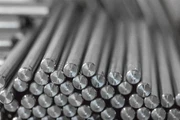

The Inspection Methods For Nickel-based Alloys
Apr 08, 2026
The inspection methods for nickel-based alloys (such as Inconel, Hastelloy, etc.) need to be optimized based on their specific material characteristics (such as high temperature resistance, corrosion resistance, non-magnetism, etc.). The following are the commonly used non-destructive testing (NDT) methods for nickel-based alloys and their technical points:
1. Ultrasonic Testing (UT)
Applicable scenarios: Detection of internal defects (such as cracks, pores, inclusions, etc.);
Applicable to thick-walled tubes, rods, forgings, etc.
Technical points: Probe selection: Longitudinal wave straight probe (for internal defect detection)
Transverse wave oblique probe (for detecting transverse cracks, recommended 45° - 70°)
Coupling agent: High-temperature glycerol or special coupling agent (suitable for the high density characteristic of nickel-based alloys)
Calibration block: A block matching the acoustic properties of nickel-based alloys (such as ASTM E317) is required
Phase array ultrasonic (PAUT): Can improve detection efficiency and accuracy, applicable to workpieces with complex shapes
Advantages: Can detect deep defects
Not affected by material magnetism
2. Penetrant Testing (PT)
Applicable scenarios: Detection of surface-opening defects (such as cracks, pinholes, etc.)
Applicable to the surface of all nickel-based alloys
Technical points: Penetrant type: Fluorescent penetrant (high sensitivity)
Sensitized penetrant (suitable for on-site detection)
Cleaning agent: Must be low chlorine (to prevent chlorine-induced stress corrosion)
Imaging agent: Dry powder or wet-type imaging agent
Advantages: Simple operation, low cost
Can detect workpieces with complex shapes
3. Eddy Current Testing (ET)
Applicable scenarios: Detection of surface and near-surface defects (such as cracks, folds, pores, etc.)
Applicable to thin-walled tubes, wire rods, plates
Technical points: Frequency selection: Thin wall (<1mm): 100 - 500 kHz
Medium wall thickness (1 - 3mm): 50 - 100 kHz
Thick wall (>3mm): 10 - 50 kHz
Differential probe: Enhances the detection sensitivity of tiny defects (can detect cracks as deep as 0.1mm)
Calibration standard: Requires the use of nickel-based alloy standard defect specimens
Advantages: Fast detection speed, suitable for automated online detection
No coupling agent required, non-contact detection
4. Nickel-based alloy flaw detection standards
|
Standard |
Scope of Application |
|
ASTM E213 |
Ultrasonic testing standard |
|
ASTM E309 |
Eddy current testing standard |
|
ASTM E94/E1032 |
Radiographic testing standard |
|
ASTM E165 |
Penetrant testing standard |
|
ASTM E709 |
Magnetic particle testing standard |
|
ASME BPVC |
Testing requirements for nickel-based alloys used in nuclear power plants |
 PS: Ultrasonic testing equipment