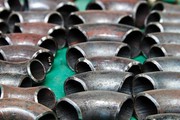

Material Selection For Butt Weld Elbows
Feb 05, 2026
The selection of materials for butt weld elbows depends on factors such as the pressure of the pipeline system, medium characteristics, and environmental conditions. Common materials include:
Carbon steel: Low cost but poor corrosion resistance, suitable for low-pressure, normal-temperature, and non-corrosive scenarios.
Stainless steel: Excellent corrosion resistance and high-temperature stability, applicable to corrosive environments, sanitary-grade requirements, and high-temperature, low-pressure conditions.
Alloy steel: High-temperature strength, creep resistance, or low-temperature resistance, suitable for high-temperature/high-pressure or low-temperature/high-pressure pipelines.
Special materials (e.g., nickel-based alloys, titanium, and titanium alloys): Used in extreme environments such as strong corrosion or ultra-high temperatures.
All materials comply with corresponding domestic and international standards.
Technical Requirements
These cover the entire manufacturing process:
Manufacturing processes: Including pushing (for small-to-medium diameter, thin-walled elbows), pressing (for large-diameter, thick-walled elbows), and welded forming (for large-diameter elbows with segmented welding).
Dimensional tolerances: Conforming to relevant standards, with clear deviation requirements for angle, outer diameter, wall thickness, and curvature radius.
Welding requirements: Focusing on groove design, matching of welding materials, welding methods, and post-welding treatment.
Heat treatment: Annealing, solution treatment, etc., to eliminate stress or optimize performance, depending on the material.
Surface treatment: Derusting, painting, or galvanizing for carbon steel; pickling and passivation for stainless steel.
Inspection
Inspection runs through the entire process from raw materials to finished products:
Raw material inspection: Verifying quality certificates and conducting physical and chemical tests.
In-process inspection: Including dimensional checks and monitoring of the welding process.
Finished product inspection: Encompassing visual inspection, non-destructive testing (radiographic, ultrasonic, magnetic particle/penetrant testing, etc.), pressure tests (hydrostatic or pneumatic), and other tests such as hardness testing and metallographic analysis.